How to Find Auction Photos by VIN for Any Used Car

That "clean" used car on the dealer lot? There's a good chance it looked very different six months ago when it sold at auction with structural damage, deployed airbags, or flood contamination. The difference between what dealers show you and what actually happened is hiding in auction photos—and most buyers never see them.
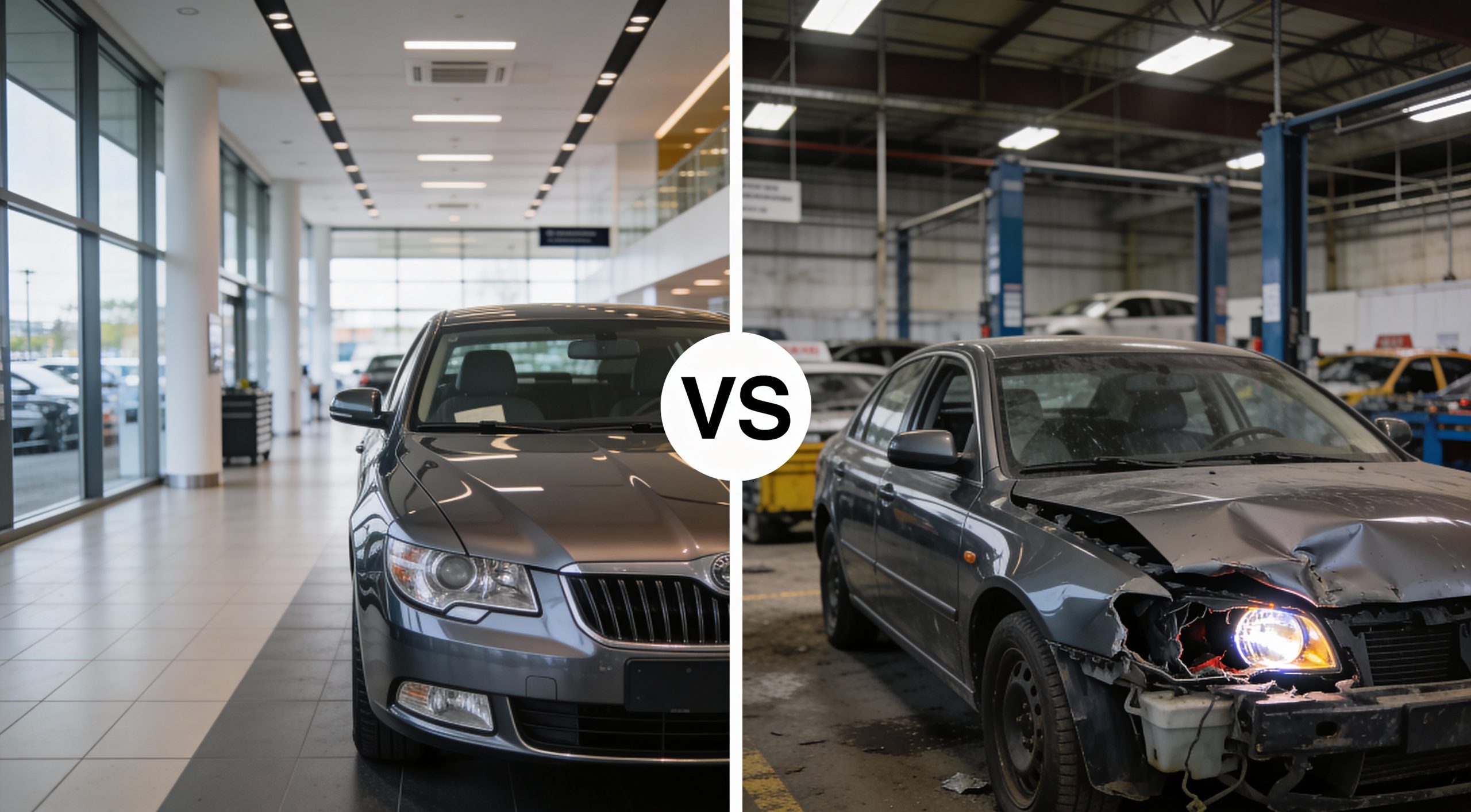
Unlike traditional vehicle history reports that only tell you something happened, auction photos by VIN show you exactly what the damage looked like. They reveal the crumpled fenders, the water lines on the seats, and the engine bay covered in mud that got cleaned up before the car landed on a dealer's lot.
This guide shows you exactly how to find auction photos by VIN for any used car—and what to look for once you have them.
Find Auction Photos by VIN
VinPassed reports include actual auction photos, repair estimates, and the real price dealers paid—data that Carfax and AutoCheck don't provide.
View Sample Report →Why Auction Photos by VIN Matter More Than Text Reports
Carfax and AutoCheck rely on text-based data from insurance companies, DMVs, and service shops. When they report "moderate damage" or "structural damage reported," you're left guessing what that actually means. Was it a fender bender or a head-on collision? This is why Carfax misses accidents.
Auction photos by VIN eliminate the guesswork. When a vehicle goes through Copart, IAAI, or Manheim auctions, photographers document its condition with 8-15 photos showing every angle—exterior damage, interior condition, engine bay, undercarriage, and odometer reading.
Here's what makes auction photos by VIN invaluable:
- Visual proof of damage extent: Text says "front end damage." Photos show whether it was a bumper replacement or frame-buckling impact.
- Pre-repair documentation: You see the car before someone spent $3,000 making it look presentable.
- Interior condition: Flood vehicles often show water lines, stained carpets, and mold that get cleaned but leave evidence in photos.
- Odometer verification: Auction photos capture the dash, letting you verify mileage wasn't rolled back.
- Hidden mechanical issues: Engine bay photos can reveal fluid leaks, missing components, or fire damage.
According to the National Motor Vehicle Title Information System (NMVTIS), over 800,000 vehicles are declared salvage or total loss annually in the United States. Many of these get repaired and resold—often without buyers ever knowing the full story.
What Auction Photos by VIN Reveal That Text Reports Miss
A vehicle history report might tell you a car had "damage reported" in 2023. But there's a massive difference between these scenarios—and only auction photos by VIN show which one you're actually dealing with:
Scenario 1: Minor Cosmetic Damage
A parking lot scrape that required bumper replacement. Photos show surface-level damage, no structural involvement, clean frame rails. This car is probably fine.
Scenario 2: Significant Structural Damage
A front-end collision that crumpled the frame rails, deployed airbags, and required $18,000 in repairs. Photos show accordion-folded metal, hanging wires, and damage extending into the firewall. This car will never drive right. Learn more about structural damage and why it matters.
Both scenarios might generate the same "accident reported" line on a Carfax. The photos tell completely different stories.
How to Find Auction Photos by VIN: Step-by-Step
Finding auction photos by VIN isn't as simple as running a standard vehicle history check. Most mainstream services don't include them. Here's how to actually get the photos:
Step 1: Get the VIN
The 17-character Vehicle Identification Number is your key. Find it on:
- The dealer's listing (usually displayed)
- The dashboard (visible through windshield, driver's side)
- The driver's door jamb sticker
- The vehicle title or registration
Step 2: Use a Service That Includes Auction Data
Not all vehicle history reports include auction photos by VIN. Here's what different services provide (see our full Carfax vs AutoCheck comparison):
| Service | Auction Photos | Sale Prices | Repair Estimates |
|---|---|---|---|
| Carfax | ❌ | ❌ | ❌ |
| AutoCheck | ❌ | ❌ | ❌ |
| NMVTIS | ❌ | ❌ | ❌ |
| VinPassed | ✅ Up to 10+ | ✅ | ✅ |
Step 3: Review Every Photo Carefully
Auction photographers follow a standard pattern. You'll typically receive photos of:
- Front exterior (straight on)
- Rear exterior
- Driver and passenger sides
- All four corners (where damage often hides)
- Interior/dashboard
- Engine bay
- Undercarriage (if damage is significant)
- Specific damage close-ups
Step 4: Cross-Reference With Current Listing
Compare the auction photos to the dealer's current listing photos. Check the dealer listing history and look for:
- Repainted panels (color/texture mismatch)
- Replaced body parts (different panel gaps)
- New interior components (mismatched wear patterns)
- Anything that looks "too clean" in a specific area
What to Look for in Auction Photos by VIN
Knowing what to examine separates informed buyers from victims. Here are the critical areas to inspect:
1. Frame and Structural Components
Look at frame rails, strut towers, and unibody attachment points. Wrinkled metal, fresh welds, or misaligned panels indicate structural repair that affects safety and resale value.
2. Paint Consistency
Factory paint has uniform texture and color. Repainted areas often show orange peel texture, overspray on trim pieces, or slight color variation when viewed at angles.
3. Flood Indicators
Water lines on seats, door panels, or the firewall. Mud/silt in crevices that are difficult to clean. Foggy gauge clusters or headlights. Musty staining on carpet backing.
4. Interior Condition
Does the wear pattern match the mileage? A 30,000-mile car shouldn't have a worn-through driver's seat. Look for replaced components that don't match original materials.
5. Engine Bay
Fluid leaks, fire damage, replaced components with different patina than surrounding parts. A steam-cleaned engine bay on a salvage car is often hiding something.
6. Undercarriage
Rust patterns, impact damage, bent suspension components, exhaust damage. Undercarriage photos are rare but extremely valuable when available.
Real Example: How Auction Photos by VIN Exposed a $25,000 Scam
This is exactly why auction photos by VIN matter—and why you need to understand how dealers can hide accident history.
A 2015 Maserati Ghibli S Q4 appeared on a dealer lot in Utah for $25,495. The listing advertised "NO ACCIDENT DAMAGE" with glossy photos showing a pristine luxury sedan.
Here's what a VinPassed report revealed:
- August 2018: Structural damage reported
- October 2020: Vehicle reported stolen (verify theft status free at NICB VINCheck)
- February 2021: Insurance total loss — salvage title issued
- March 2021: Sold at auction for $16,200 with estimated repairs of $25,900
- March 2022: Listed by dealer for $25,495 claiming "no accident damage"
The auction photos showed severe front-end damage, deployed airbags, and damage extending into the engine compartment. The repair estimate at auction was $25,900—more than the car was worth.
Yet someone repaired it and a dealer put it on their lot advertising "no accident damage." Without auction photos by VIN, a buyer would have no way to know they were about to pay $25,495 for a car a dealer bought for $16,200 in damaged condition.
The Bottom Line
The dealer's claim of "no accident damage" was verifiably false. The auction photos proved it. This is why visual documentation matters more than any text-based report.
See the full VinPassed sample report →
Use Auction Data to Negotiate
Beyond avoiding bad deals, auction photos give you powerful negotiating leverage. When you know what the dealer paid and what condition the car was in, you can make data-backed offers instead of guessing.
Protect Your Purchase After You Buy
Finding auction photos by VIN and verifying a vehicle's true history is step one. But even a car with a clean history can develop expensive problems—especially higher-mileage vehicles or those that spent time at auction.
One challenge: most traditional warranties won't cover vehicles over 100,000-150,000 miles, and many exclude cars with salvage history entirely. This leaves buyers of auction-sourced vehicles without protection options.
VIP Warranty takes a different approach. They accept vehicles up to 250,000 miles for enrollment, with no mileage cap once you're covered. Their exclusionary coverage protects virtually everything mechanical—not just powertrain—at a fraction of dealer warranty pricing.
Auction Photos by VIN: The Bottom Line
Dealers have access to auction data. They know what they paid. They know what damage existed. They're betting you won't find out.
Don't give them that advantage.
A comprehensive vehicle history report with auction photos, actual sale prices, and repair estimates levels the playing field. You see what the dealer saw when they bought the car—and you can negotiate accordingly.
Find Auction Photos by VIN
VinPassed Report — $29.99
Auction photos • Real sale prices • Repair estimates • Full history
Check Any VIN Now →Frequently Asked Questions
Does Carfax show auction photos by VIN?
No. Carfax provides text-based damage reports but does not include auction photographs. To find auction photos by VIN, you need a service like VinPassed that specifically includes auction imagery. Learn more about whether Carfax is worth it.
Are auction photos available for every car?
Auction photos exist for vehicles that passed through major auction houses like Copart, IAAI, and Manheim. Not every used car goes through auction—some are trade-ins sold directly. If a vehicle has auction history, photos are typically available.
How recent are auction photos?
Photos are from when the vehicle went through auction, which could be weeks to years before the current listing. The value is seeing the vehicle's condition at a documented point in time—especially if damage was present that has since been repaired.
Can I find auction photos by VIN for free?
Some free VIN check services offer limited auction history, but photo access typically requires a paid report. Free VIN checks generally provide only basic title and registration data, not visual documentation.
What if there are no auction photos for a VIN?
If no auction photos exist, the vehicle likely wasn't sold through major auction channels. This could mean it was a dealer trade, private sale, or lease return sold through manufacturer channels. The absence of auction history isn't necessarily good or bad—it just means this particular documentation method doesn't apply.