Salvage Title Check: Complete Guide for Buyers (2026)

You found a great deal on a used car. The price is thousands below market value, the photos look clean, and the dealer says it runs perfectly.
Then you run a salvage title check and discover the car was declared a total loss two years ago.
That result is not automatically a deal-breaker. But buying a salvage vehicle without knowing the full history is how buyers lose thousands on repairs, financing denials, and resale losses they never saw coming. This guide explains what salvage titles mean, how to run a title check on any VIN, and when buying one is actually a smart move.
Check Title Status Right Now
VinPassed's $4.99 Title and Stolen Check covers all 50 states instantly. Know whether this vehicle's title is clean before you spend another hour on it.
Check Title for $4.99 →What Is a Salvage Title Check?
A salvage title check reveals whether a vehicle has been declared a total loss by an insurance company. This happens when the cost to repair the vehicle exceeds a certain percentage of its value, typically 70 to 80 percent depending on the state.
Common reasons a title check would turn up issues:
- Collision damage: Major accidents where repair costs exceed the threshold
- Flood damage: Vehicles submerged in water during hurricanes, floods, or storms
- Fire damage: Vehicles damaged by fire or smoke
- Theft recovery: Stolen vehicles found after the insurance claim was paid
- Vandalism: Extensive damage exceeding the repair threshold
- Hail damage: Severe hail storms causing a total loss designation
Once a vehicle receives a salvage title, it cannot legally be driven on public roads until it has been repaired and inspected by the state.
Understanding Title Types
When you run a salvage title check, you will encounter three main title categories:
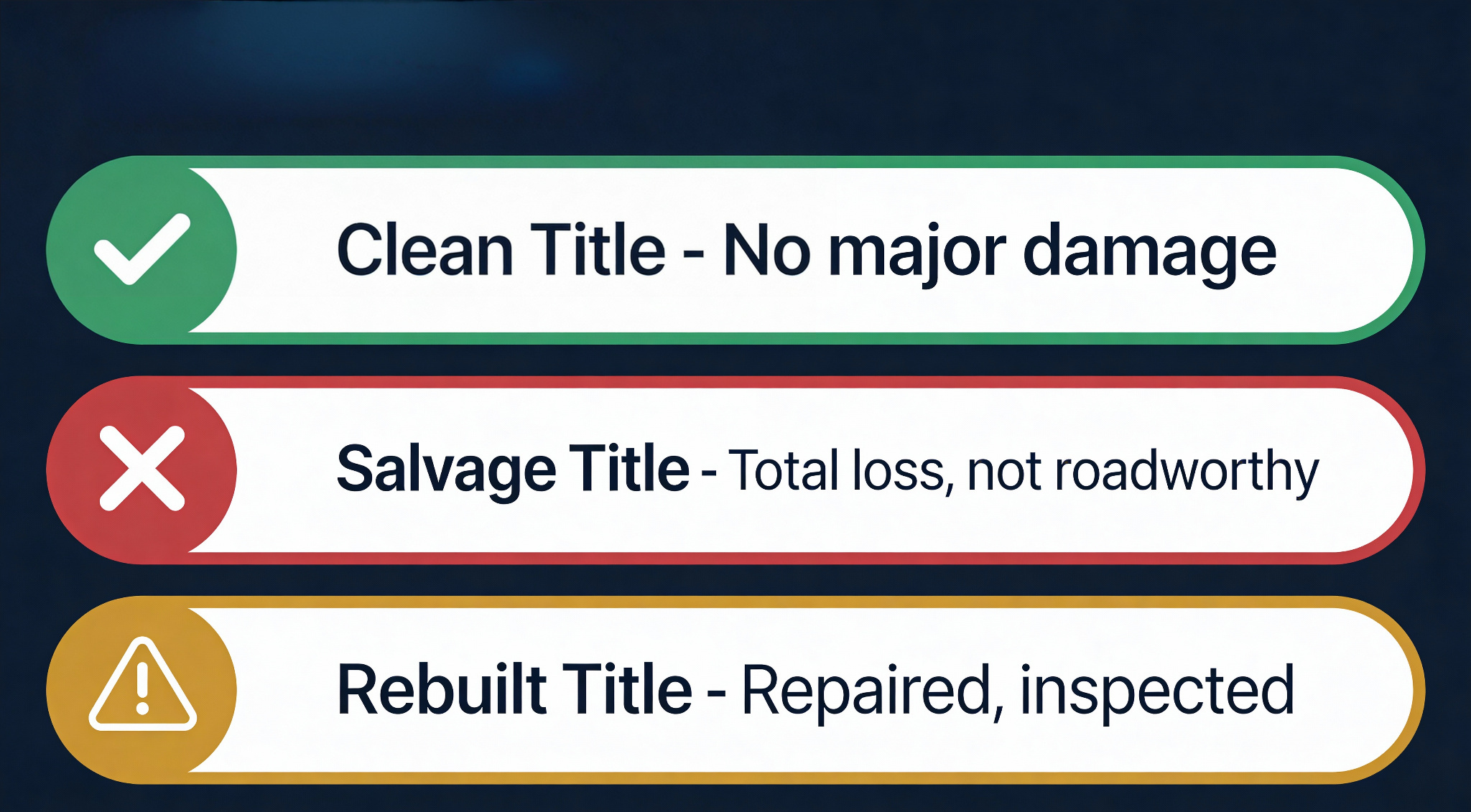
Clean Title
No major damage history. Never declared a total loss. This is what most buyers want and should expect at full market price.
Salvage Title
Declared a total loss by an insurer. Cannot be legally driven. Must be repaired and inspected before returning to the road.
Rebuilt Title (also called Reconstructed)
Was previously salvage, now repaired and passed state inspection. Legal to drive, but the damage history follows the vehicle forever.
Title Washing Warning
Title washing is when a salvage vehicle is moved between states to exploit different title laws, eventually ending up with a clean title despite its damage history. It is illegal but common. A thorough salvage title check across multiple databases catches most attempts. This is one of the primary ways dealers hide accident history from buyers.
How to Run a Salvage Title Check
Here is how to run a complete title check on any vehicle:
- Get the VIN Find the 17-character Vehicle Identification Number on the listing, dashboard (visible through the windshield), or driver's door jamb.
- Check NMVTIS The National Motor Vehicle Title Information System is the federal database that tracks title brands including salvage designations. It is the most authoritative source for any salvage title check, and federally mandated reporters must submit data to it within 30 days of a title action.
- Run a VinPassed Title Check VinPassed's $4.99 Title and Stolen Check covers title brands across all 50 states and confirms whether the vehicle has been reported stolen. For vehicles with suspected auction history, the $9.99 Auction Report also pulls Copart and IAAI records with pre-repair damage photos.
- Verify Across Multiple States If the vehicle has registration history in multiple states, title status should be verified in each. Title washing exploits the gaps between state databases, which is why checking a comprehensive multi-state source matters more than any single lookup.
What a Title Check Reveals
When a salvage title check surfaces damage history, here is what the data covers:
| Data Point | Why It Matters |
|---|---|
| Title brand history | Shows when the salvage title was issued and in which state |
| Salvage auction records | Where and when it sold at salvage auction (Copart, IAAI) |
| Auction photos | Images of the actual damage before any repairs were made |
| Primary and secondary damage | What type of damage caused the total loss designation |
| Repair estimate | The documented cost to properly repair the damage |
| Auction sale price | What the vehicle sold for in damaged condition |
The auction photos are particularly valuable. They show exactly what the vehicle looked like before anyone had a chance to conceal or minimize the damage.
After the Check: Should You Buy?
Salvage and rebuilt title vehicles are not automatically bad purchases. Some are legitimate deals when you understand what you are getting. Here is how to evaluate after running a title check:
Potentially Worth Buying
- Cosmetic damage only: Hail damage or minor collision that did not affect structure or safety systems
- Theft recovery: Vehicle was stolen, stripped, recovered. Mechanical systems may be intact. Verify stolen status at NICB VINCheck
- Well-documented repairs: Professional shop receipts showing exactly what was fixed and by whom
- Significant discount: Price is 30 to 50 percent below clean title market value
- You are mechanically capable: You can inspect it thoroughly and handle ongoing maintenance yourself
Walk Away From These
- Flood damage: Water intrusion causes electrical and corrosion problems that surface for years
- Fire damage: Heat affects wiring, plastics, and structural components in ways that are nearly impossible to fully repair
- Structural damage: Frame or unibody damage affects safety and handling permanently
- Airbag deployment: Indicates a severe impact. Replacement is expensive and quality is hard to verify
- No repair documentation: If you cannot verify what was fixed, assume the worst
Flood Damage Is the Worst Case
Flood-damaged vehicles look normal after cleaning and drying, but water infiltrates wiring harnesses, control modules, and structural cavities. Problems emerge months or years later: electrical failures, mold, and accelerating corrosion. The Consumer Reports guidance on flood-damaged vehicles is clear that most buyers should avoid them entirely.
The Real Costs That Follow a Salvage Title
Even if your salvage title check reveals issues you are comfortable with, these ongoing costs apply to any salvage or rebuilt title vehicle:
Insurance Limitations
Many insurers will not offer comprehensive or collision coverage on salvage or rebuilt titles. Those that do charge higher premiums. Some buyers qualify for liability coverage only, which means any future damage comes entirely out of pocket.
Financing Challenges
Most banks and credit unions will not finance salvage or rebuilt title vehicles. You will likely need to pay cash or use a specialty lender at a significantly higher interest rate. The CFPB's auto loan guidance recommends comparing all-in costs before committing to any used vehicle purchase.
Resale Value
Rebuilt title vehicles typically sell for 20 to 40 percent less than comparable clean-title vehicles. The title brand follows the car permanently. There is no path to restoring a clean title.
Warranty Exclusions
Most extended warranty companies exclude salvage and rebuilt title vehicles entirely. Even policies that do cover them exclude pre-existing damage-related issues.
Exception: VIP Warranty
VIP Warranty covers vehicles that most companies reject, including many with rebuilt titles. Their exclusionary coverage protects virtually all mechanical components up to 250,000 miles. If you are seriously considering a rebuilt title vehicle, having that coverage available changes the risk calculation considerably.
Pre-Purchase Checklist for Salvage or Rebuilt Titles
If your salvage title check reveals issues and you are still considering the vehicle, verify everything on this list before committing:
Before Purchase Checklist:
- Run a VinPassed Title and Stolen Check to confirm current title status
- Verify title brand through NMVTIS directly
- Request all repair documentation from the seller
- Confirm state inspection was completed for rebuilt titles
- Get an independent pre-purchase inspection from a trusted mechanic
- Look for water damage signs: musty smell, waterlines, door panel corrosion
- Inspect frame and unibody for signs of structural repair or misalignment
- Verify all VINs match: door jamb, dashboard, engine bay
- Get insurance quotes before committing to purchase
- Calculate true all-in cost versus a comparable clean title alternative
How Dealers Hide What a Salvage Title Check Would Reveal
Unscrupulous dealers use several tactics to sell salvage vehicles as clean. Knowing them helps you protect yourself.
Title Washing
Moving a vehicle through states with lenient title laws until the salvage brand disappears. A vehicle might be salvaged in Florida, "rebuilt" in Alabama, then sold as clean in Ohio. A comprehensive salvage title check that pulls multi-state records catches most of these attempts.
VIN Cloning
Replacing the VIN plates with those from a clean-title vehicle of the same make and model. The salvage vehicle takes on the identity of the clean one. Physically verifying VIN plates in multiple locations is the primary defense.
"Carfax Clean" Misdirection
Carfax may not show salvage history if the title was washed or if reporting delays occurred. Dealers exploit this by advertising a clean Carfax on vehicles with hidden salvage records. See exactly what Carfax misses and why.
Cosmetic Concealment
Professional repair and detailing can make a previously totaled vehicle look showroom-new. Without documentation and auction records, there is no way to know from appearance alone. This is why checking salvage auction databases directly matters: if a vehicle went through Copart or IAAI, that record exists regardless of what the current title says.
The Bottom Line on Salvage Title Checks
A salvage title check should be the first step when evaluating any used car where the price seems below market. At $4.99, there is no reason to spend hours researching a vehicle before knowing whether its title is clean.
If the title check surfaces issues, the next decision point is the depth of damage. A $9.99 Auction Report shows pre-repair damage photos and what the dealer paid. A $29.99 complete VinPassed report adds full accident history, all title records, and AI-flagged risk factors.
Some salvage vehicles are legitimate deals. Use the history as negotiating leverage. Others are disasters waiting to surface. The difference is having the complete picture before you commit.
Start With the Title Check
Know if this vehicle's title is clean before you go any further.
$4.99 title check · $9.99 auction report · $29.99 complete intelligence
Check Title for $4.99 →Frequently Asked Questions
How do I run a salvage title check?
Run the VIN through NMVTIS (the federal title database) and a service like VinPassed that includes salvage auction records. Using both sources catches title washing attempts that a single database might miss. VinPassed's $4.99 Title and Stolen Check covers title brands across all 50 states instantly. Start with a free VIN check if you want recalls and safety data first.
Can a salvage title be removed?
No. Once issued, a salvage title cannot be removed. A vehicle can be repaired and converted to a rebuilt title after passing state inspection, but the damage history remains part of the permanent record.
Is it safe to buy a car with a rebuilt title?
It depends on the damage type and repair quality. Rebuilt titles from cosmetic damage such as hail or theft recovery are generally safer than those from structural damage, flood, or fire. Always review the original damage photos and get an independent inspection before purchasing.
Why is a salvage car so cheap?
Salvage vehicles are priced lower because of insurance limitations, financing restrictions, reduced resale value, and buyer risk perception. The discount should account for all of those ongoing costs. If it does not, you are not getting a real deal.
Does Carfax show salvage title history?
Carfax usually shows salvage titles, but not always. Title washing, reporting delays, and database gaps can cause salvage history to be missing. A title check using direct auction records from Copart and IAAI provides more complete information. See our Carfax vs AutoCheck comparison for a full breakdown.
What is the cheapest way to check a car's title status?
VinPassed's $4.99 Title and Stolen Check covers title brands across all 50 states and confirms the vehicle has not been reported stolen. It is the fastest way to know whether a vehicle's title is clean before spending time or money going further.