How to Avoid Used Car Scams: The Complete Protection Guide
The Bottom Line: To avoid used car scams, you need more than a test drive and a gut feeling. With 450,000 vehicles sold annually with false odometer readings and billions lost to fraud each year, protecting yourself requires vehicle intelligence that goes beyond what traditional history reports provide. This guide covers every major scam, how to detect them, and the tools that actually work.
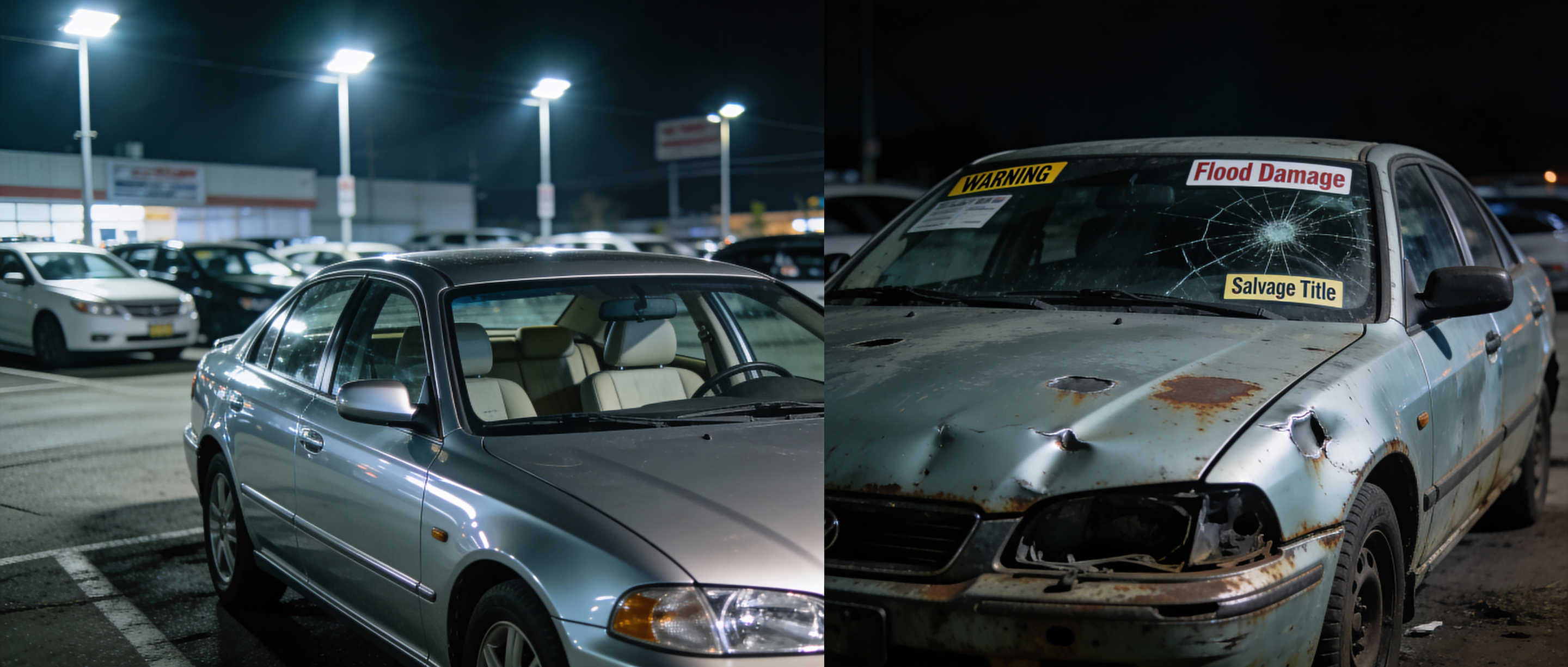
The used car market has never been more treacherous. Prices remain elevated from pandemic-era supply shocks, and scammers have responded with increasingly sophisticated schemes designed to extract maximum value from unsuspecting buyers. If you want to avoid used car scams, you need to understand exactly how these frauds work—and what information can expose them.
This isn't about being paranoid. It's about being prepared. The same dealers and private sellers who commit fraud count on buyers who don't know what to look for. By the time you finish this guide, you'll know more about detecting vehicle fraud than most people in the industry.
🎯 FREE DOWNLOAD: Complete Protection Checklist
Get the printable checklist with inspection forms, emergency contacts, and state-specific resources!
View/Print Complete ChecklistThe Scale of the Problem: Why You Need to Avoid Used Car Scams
Before diving into specific scams, let's establish why this matters. The numbers from federal agencies paint a sobering picture of why every buyer needs to actively work to avoid used car scams.
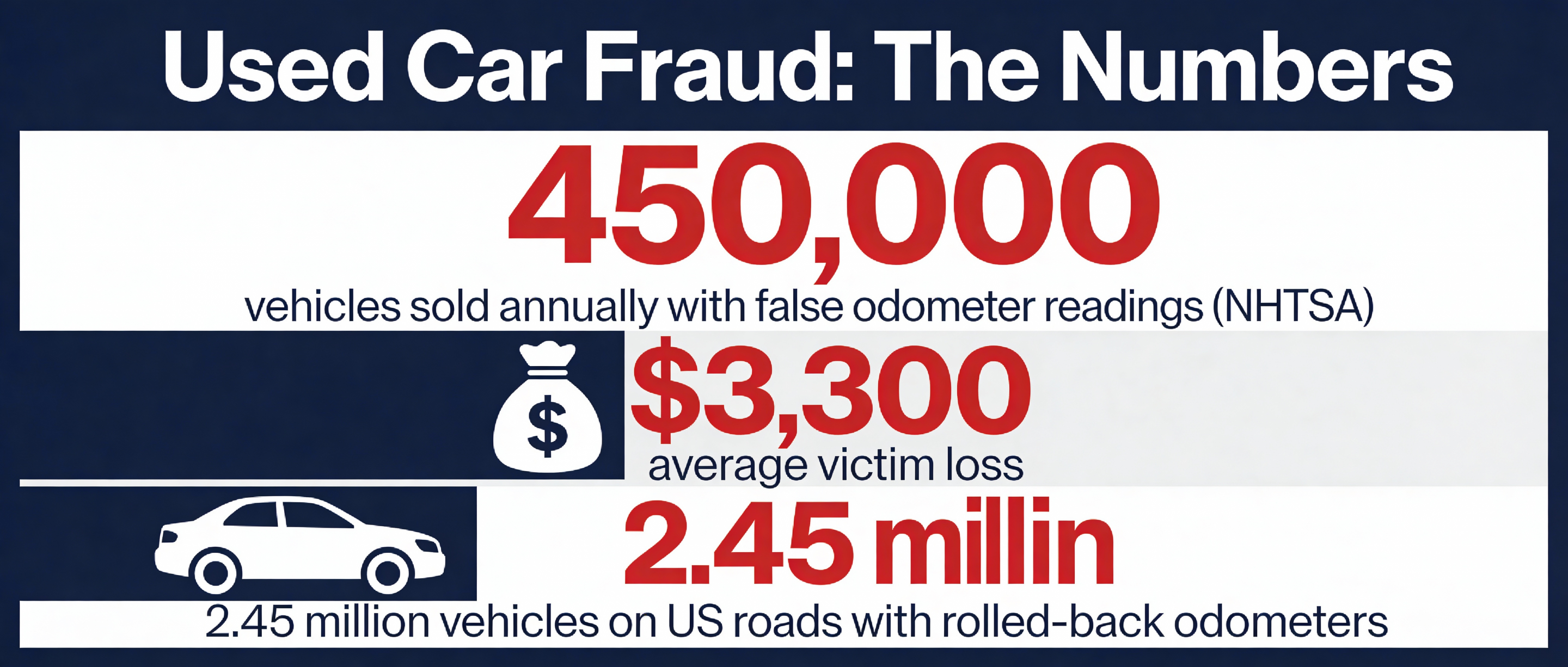
According to the National Highway Traffic Safety Administration (NHTSA), odometer fraud alone costs American consumers over $1 billion annually. And that's just one type of scam. When you factor in title washing, curbstoning, VIN cloning, and online fraud, the true cost to consumers is significantly higher.
The 2025 Carfax odometer fraud report found a 14% year-over-year increase in vehicles suspected of having rolled-back odometers—the sharpest acceleration in years. States seeing the largest increases include Montana (33%), Tennessee (30%), and Florida (20%).
What makes these statistics particularly alarming is that most victims never realize they've been scammed. They simply wonder why their "low-mileage" vehicle needs expensive repairs years before it should. Learning to avoid used car scams isn't optional—it's financial self-defense.
The 6 Most Common Used Car Scams (And How to Detect Each)
Scammers succeed because they exploit specific information gaps. Here's every major scheme, exactly how it works, and the intelligence that exposes it. If you want to avoid used car scams, you need to understand all of these.
1. Odometer Rollback: The $1 Billion Fraud
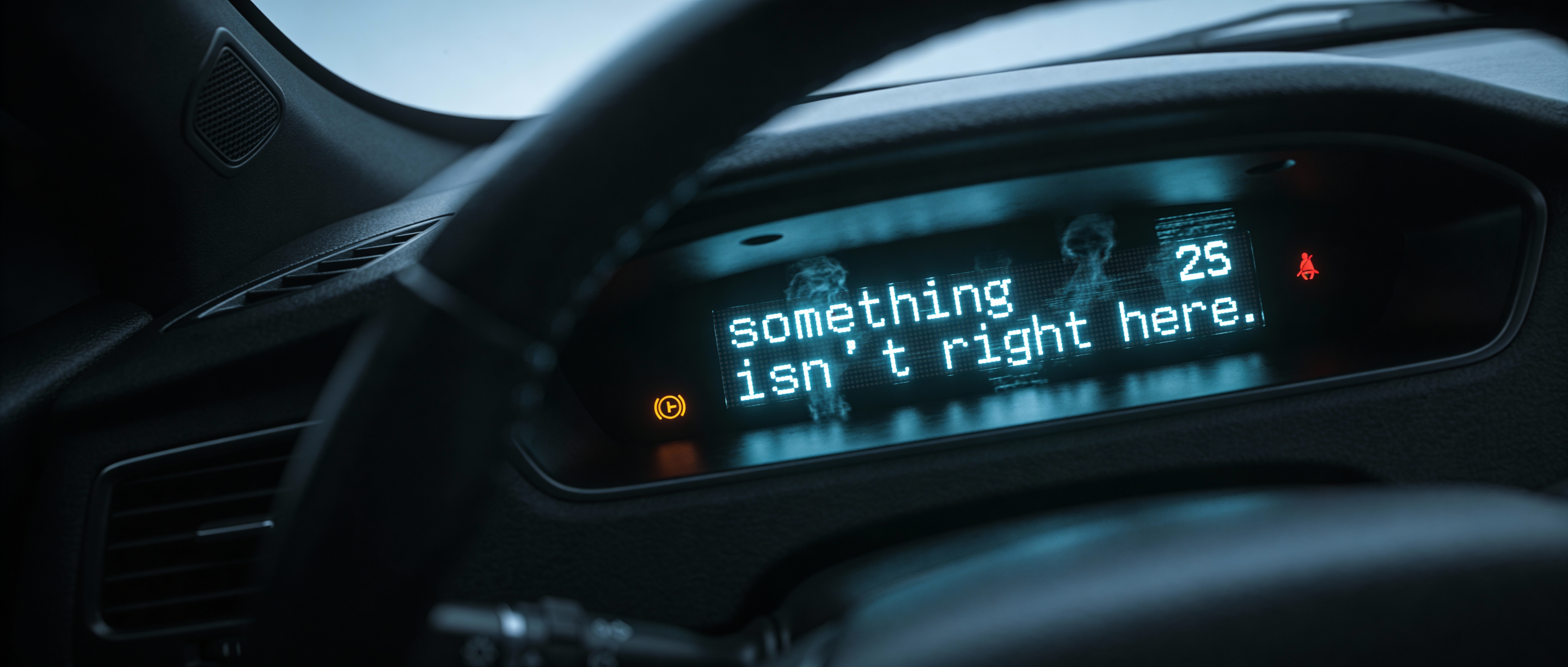
Many buyers assume digital odometers eliminated this scam. They're wrong. Modern odometer rollback is actually easier than the mechanical version—plug a device into the OBD-II port, and within minutes, 50,000 miles vanish. The tools are legal (for legitimate purposes like odometer replacement after repair) and cost under $100 online.
How It Works
A seller purchases a high-mileage vehicle cheaply, rolls back the odometer by 30,000-80,000 miles, and sells it at significantly inflated prices. The buyer thinks they're getting a well-maintained, low-mileage vehicle. They're actually getting a worn-out car with deferred maintenance bombs waiting to explode.
🚩 Red Flags
- Wear on pedals, steering wheel, or seats inconsistent with displayed mileage
- New tires on a vehicle showing under 30,000 miles
- Oil change stickers or service records showing higher mileage
- Numbers on mechanical odometer misaligned or jiggling
- Vehicle priced significantly below market value
✅ How to Protect Yourself
- Request vehicle history report and verify mileage progression over time
- Compare odometer to service records, inspection stickers, and maintenance logs
- Have a mechanic assess wear patterns vs. displayed mileage
- Check auction records if available—mileage was recorded at time of sale
2. Title Washing: Making Salvage Disappear
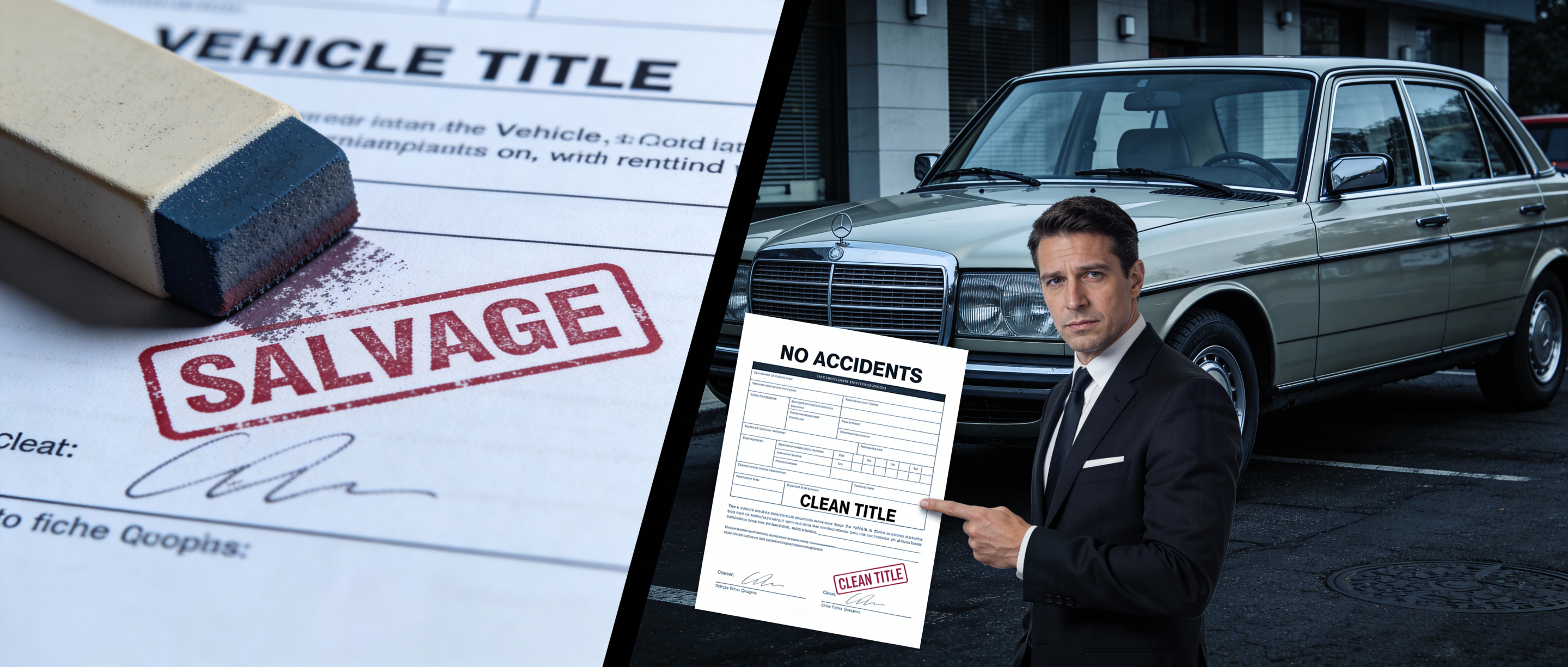
Title washing is particularly insidious because it exploits a fundamental flaw in our state-by-state vehicle registration system. When a vehicle is declared a total loss—typically when repair costs exceed 70-80% of value—it receives a "salvage" or "rebuilt" brand on its title. This brand should follow the vehicle forever. It often doesn't.
How It Works
Scammers register salvage-titled vehicles in states with weak title branding requirements or poor interstate data sharing. The vehicle emerges with a "clean" title that hides its history of total loss, flood damage, or major collision. Buyers pay full price for vehicles worth 30-40% less—and may be driving fundamentally unsafe cars.
🚩 Red Flags
- Title shows vehicle registered in multiple states in short time period
- Paint doesn't match between panels or has visible overspray
- Gaps in body panels are uneven
- Recent title issued as "duplicate" without clear explanation
- Price significantly below market for year/mileage/condition
✅ How to Protect Yourself
- Check NMVTIS (National Motor Vehicle Title Information System) for title brands
- Use NICB VINCheck for free stolen/salvage/flood check
- Review complete title history across all states vehicle was registered
- Have vehicle inspected at independent body shop for repair evidence
3. Curbstoning: The Fake "Private Seller"
Curbstoning occurs when unlicensed dealers pose as private sellers to avoid regulations, taxes, and accountability. They often sell vehicles with hidden problems—salvage history, flood damage, odometer rollback—that legitimate dealers couldn't legally sell without disclosure.
How It Works
A curbstoner might buy 20-30 problem vehicles at auction, then list them individually on Craigslist or Facebook Marketplace as a "private sale." They meet buyers in parking lots or driveways (hence "curbstoning"), collect cash, and disappear. When problems surface, the buyer has no recourse.
🚩 Red Flags
- Seller's name doesn't match name on title
- Same phone number appears on multiple vehicle listings
- Seller insists on meeting in public location rather than their home
- Seller can't answer basic questions about vehicle's history
- Multiple VINs when you search the seller's phone number
✅ How to Protect Yourself
- Verify seller's ID matches the name on the title
- Search seller's phone number for other vehicle listings
- Ask specific questions about maintenance and ownership history
- Walk away if anything feels "off"—legitimate sellers have nothing to hide
Most states require dealer licensing after selling a certain number of vehicles annually (typically 5-6). Curbstoners are breaking the law, which tells you everything you need to know about their ethics regarding the vehicles they're selling.
4. VIN Cloning: Stealing an Identity
VIN cloning is essentially identity theft for vehicles. Scammers take the VIN from a legitimate, legally registered vehicle and attach it to a stolen car or one with a salvage/flood history. The cloned vehicle now has a "clean" history—because it's showing someone else's history.
How It Works
The scammer finds a vehicle of the same year, make, and model with a clean title. They create a fake VIN plate and documentation, then attach this identity to a problematic vehicle. When buyers run a VIN check, they see the clean vehicle's history. They're actually buying a different car entirely.
🚩 Red Flags
- VIN plate appears tampered with or loosely attached
- VIN on dashboard doesn't match VIN on door jamb sticker
- Vehicle history doesn't match what seller describes
- Documents look altered or unofficial
- Price is significantly below market value
✅ How to Protect Yourself
- Compare VINs in multiple locations: dashboard, door jamb, engine block
- Verify VIN hasn't been reported stolen via NICB VINCheck
- Have the VIN checked by law enforcement if suspicious
- Ensure all documentation shows matching, consistent VINs
5. Online Purchase Scams: The Phantom Vehicle
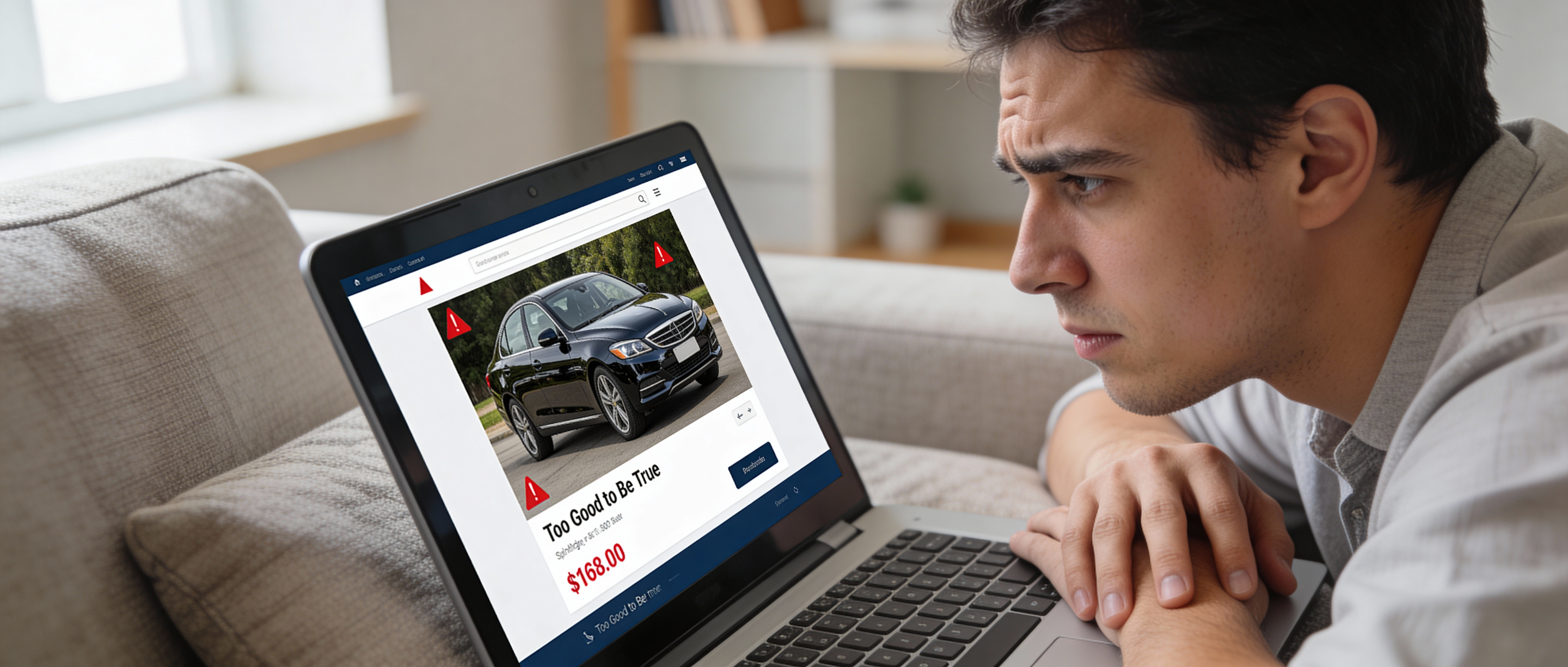
The shift to online car shopping has created fertile ground for fraud. Scammers post attractive listings for vehicles that may not exist, then pressure buyers into sending deposits or full payment before seeing the car.
How It Works
A scammer posts photos of an attractive vehicle at a below-market price. When buyers inquire, the scammer claims to be relocating, deployed overseas, or selling for a deceased relative. They request wire transfers, gift cards, or cryptocurrency—payment methods that can't be reversed. The vehicle never arrives.
🚩 Red Flags
- Price significantly below market value
- Seller unavailable to meet in person
- Urgency tactics ("other buyers interested," "leaving the country")
- Requests for wire transfer, gift cards, or cryptocurrency
- Stock photos or images that appear on multiple listings
- Poor grammar or communication from overseas
✅ How to Protect Yourself
- Never send money before seeing the vehicle in person
- Use reverse image search on listing photos
- Verify the VIN exists and matches the described vehicle
- Meet at the seller's home or a public location like a police station
- Use secure payment methods with buyer protection
The FBI's Internet Crime Complaint Center (IC3) receives thousands of vehicle fraud complaints annually. If a deal requires payment before you can inspect the vehicle, it's almost certainly a scam.
6. Dealer Lot Scams: Hidden Damage, Hidden History
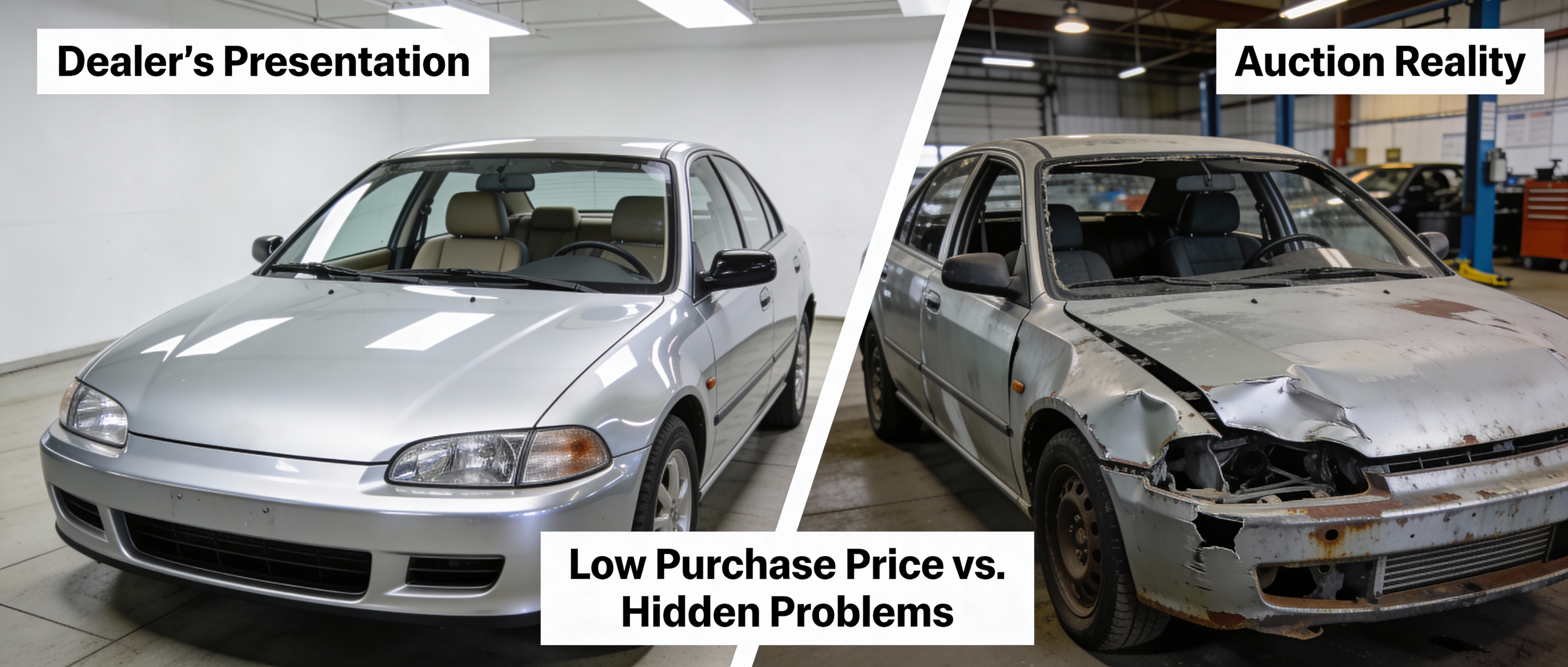
Not all dealer fraud is obvious. Many legitimate-looking dealerships engage in practices that, while sometimes legal, are designed to extract maximum money from buyers with minimum disclosure. The information asymmetry between dealers and buyers is the core problem—and it's exactly what smart buyers need to overcome to avoid used car scams.
How It Works
Dealers purchase vehicles at wholesale auctions where they receive complete condition reports, damage assessments, and detailed photos. They know exactly what's wrong with each vehicle. After reconditioning—fixing obvious issues and detailing—the vehicle appears on the retail lot looking pristine. But the underlying problems haven't gone away.
A vehicle might have $8,000 in prior hail damage, flood exposure, or structural repairs that were "fixed" cosmetically. The dealer knows. The dealer's listing doesn't mention it. Traditional vehicle history reports may not show it. And you're about to pay retail price for a vehicle worth significantly less.
The Disclosure Gap
Comprehensive vehicle reports can now flag when a dealer's listing description doesn't mention damage that appears in the auction record. This "disclosure gap" is one of the most significant red flags in used car shopping—and one that most buyers never see.
What Dealers Know That You Don't
- Auction photos showing pre-reconditioning condition
- Damage assessments from auction inspectors
- Actual acquisition cost (critical for negotiation)
- Condition announcements like frame damage or flood exposure
- Prior auction history showing vehicles that failed to sell multiple times
✅ How to Protect Yourself
- Get vehicle intelligence reports that include auction photos and condition records
- Compare dealer's description to documented vehicle history
- Ask dealer directly about prior damage—get denials in writing
- Have vehicle inspected by independent mechanic before purchase
- Know the dealer's acquisition cost when negotiating price
The Protection Hierarchy: 4 Levels of Defense
Not every used car purchase requires the same level of due diligence. A $3,000 beater has different risk/reward than a $35,000 family SUV. Here's how to match your protection to your purchase—and avoid used car scams at every price point.
| Protection Level | What You Get | Best For | Cost |
|---|---|---|---|
| Level 1: Pre-Purchase Inspection | Professional mechanic examines vehicle in person | Any vehicle you're serious about buying | $100-200 |
| Level 2: Complete Vehicle Intelligence | Full history + auction photos + AI analysis + confidence scoring | Purchases over $10,000; vehicles from dealers | $25-30 |
| Level 3: Standard History Report | Title history, reported accidents, service records | Mid-range purchases; initial screening | $25-45 |
| Level 4: Basic VIN Check | Specs, recalls, safety ratings, basic verification | Initial screening; budget purchases | $5 |
Level 1: Pre-Purchase Inspection (The Gold Standard)
Nothing replaces having a qualified mechanic physically examine a vehicle. They can detect issues that no report—no matter how comprehensive—can identify: unusual engine sounds, transmission behavior, suspension wear, brake condition, and the countless small signs that indicate a vehicle's true condition.
Cost: $100-200 at most independent shops. Worth every penny for any vehicle over $5,000.
Level 2: Complete Vehicle Intelligence
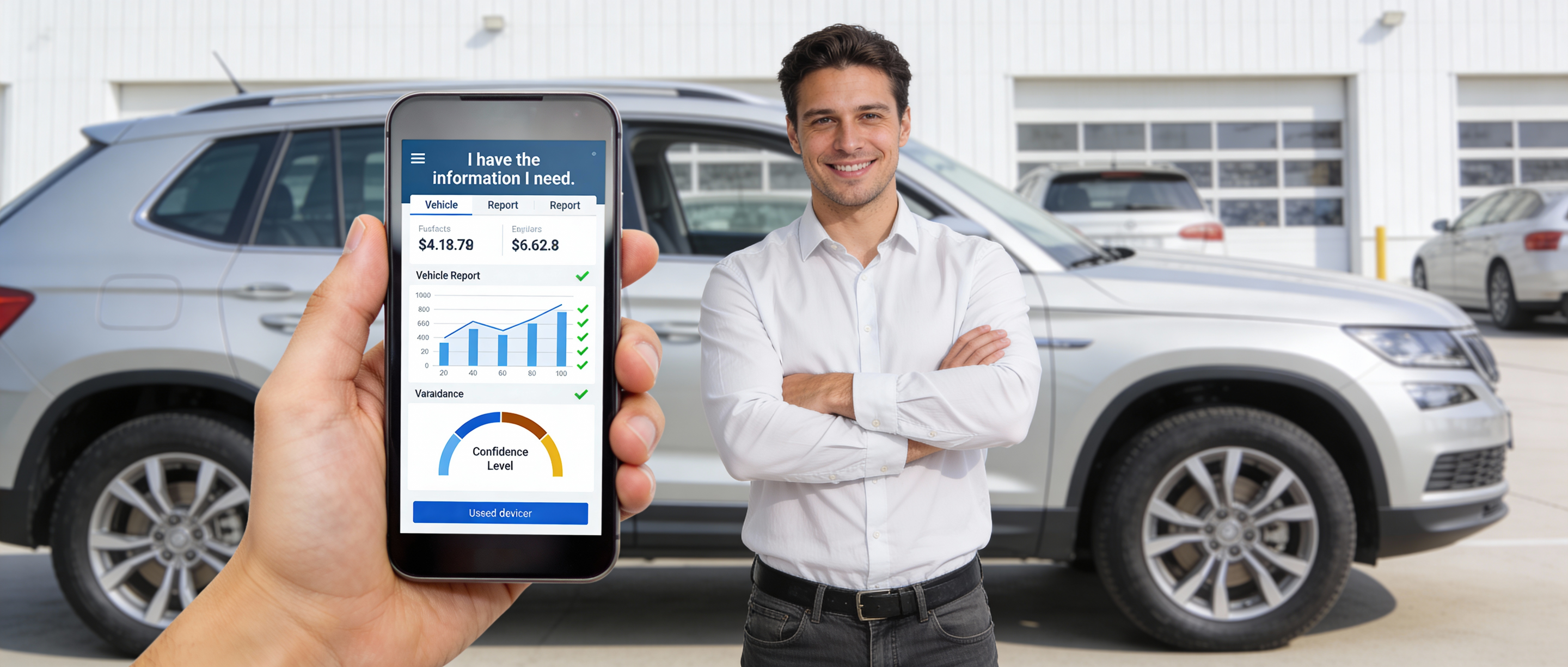
This is where modern technology has transformed what buyers can know. Advanced vehicle reports now include auction photos (showing condition when dealers bought the vehicle), AI-powered analysis of make/model-specific issues, confidence scoring across safety/reliability/value dimensions, and market pricing data.
This level of intelligence closes the information gap between you and dealers. You see what they saw. You know what they paid. You understand what they're not telling you.
Level 3: Standard History Report
Traditional reports from providers like Carfax and AutoCheck remain valuable for title history, reported accidents, and service records. However, they have significant blind spots: many accidents go unreported, auction photos are rarely included, and they can't tell you what the dealer paid or what condition the vehicle was in before reconditioning.
Level 4: Basic VIN Check
For budget purchases or initial screening, a basic VIN check provides essential verification: accurate specs, open recalls, safety ratings, and confirmation the VIN is legitimate. It won't catch odometer rollback or title washing, but it's infinitely better than nothing.
The Layered Approach
Smart buyers use multiple levels. Start with a basic VIN check to confirm specs and recalls. If interested, get complete vehicle intelligence. If still interested, schedule a pre-purchase inspection. Each layer catches things the others miss.
Red Flags Checklist: Warning Signs to Never Ignore
Learning to avoid used car scams means training yourself to recognize warning signs that most buyers miss. Print this checklist or save it to your phone before you shop.
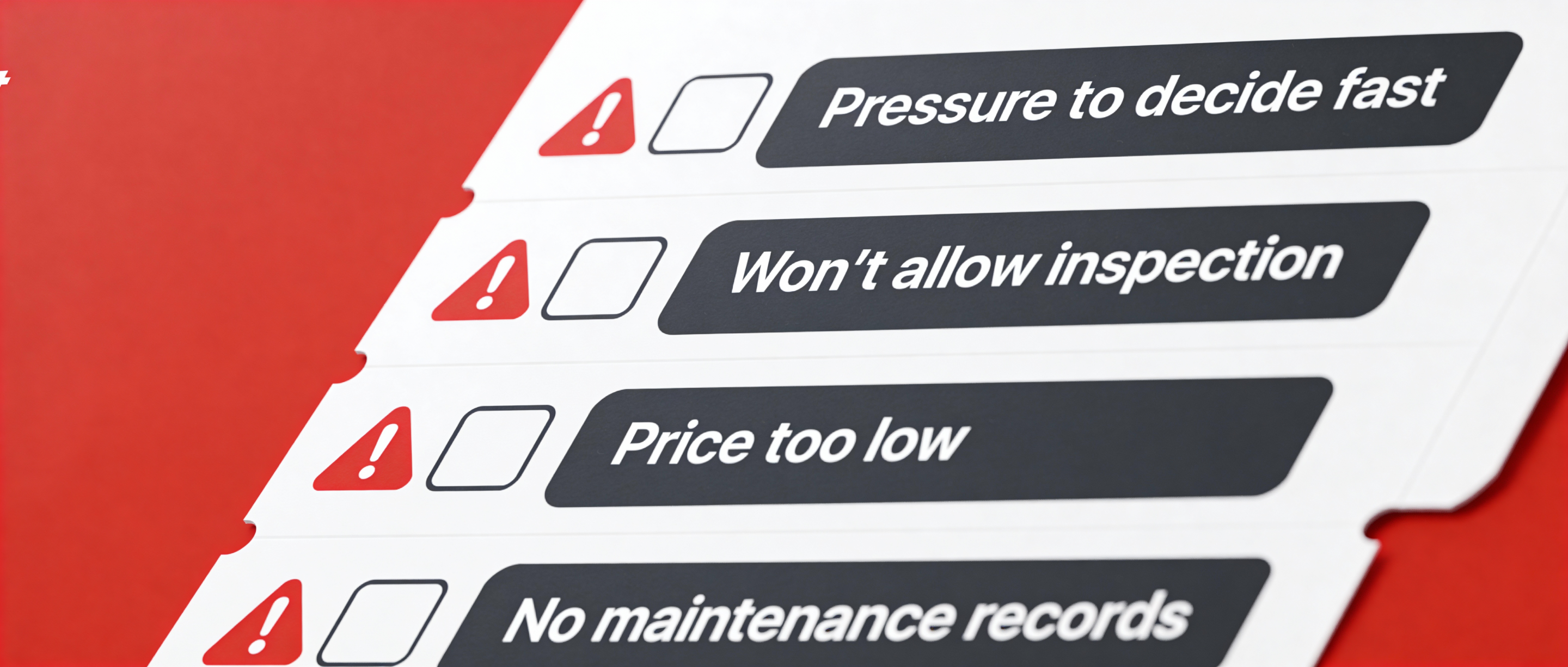
🚩 Immediate Walk-Away Red Flags
What to Do If You’ve Been Scammed
If you discover you've fallen victim to vehicle fraud despite your best efforts, take immediate action:
- Document everything. Gather all paperwork, communications, photos, and records related to the purchase.
- Report to authorities. File complaints with:
- Federal Trade Commission (FTC)
- FBI Internet Crime Complaint Center (for online fraud)
- NHTSA (for odometer fraud: 800-424-9393)
- Your state's Attorney General consumer protection division
- Your state's DMV fraud division
- Contact your financial institution. If you paid by credit card, you may be able to dispute the charge. If you financed, inform the lender of the fraud.
- Consult an attorney. Under the federal Odometer Act, victims can recover up to three times actual damages or $10,000, whichever is greater, plus attorney fees. State lemon laws and consumer protection statutes may provide additional remedies.
Statute of Limitations
You typically have two years from the date of purchase (or discovery of fraud) to file a civil lawsuit. Don't wait—evidence becomes harder to gather and sellers become harder to locate over time.
Free Tools to Help You Avoid Used Car Scams
Several free resources can help you verify vehicle information before purchase:
These free tools provide a baseline, but they won't catch everything. They don't show auction photos, dealer acquisition costs, comprehensive accident history, or AI-powered analysis of vehicle-specific issues. For complete protection, layer free verification with comprehensive vehicle intelligence.
Get Complete Vehicle Intelligence Before You Buy
Don't negotiate blind. See auction photos, damage history, confidence scores, and what the dealer actually paid—everything you need to avoid used car scams and make informed decisions.
Check Any VIN Now
Frequently Asked Questions
According to NHTSA, 450,000 vehicles are sold annually with false odometer readings alone—and that's just one type of fraud. Carfax estimates 2.45 million vehicles currently on US roads have rolled-back odometers, a 14% increase from the previous year. When you factor in title washing, curbstoning, VIN cloning, and online scams, used car fraud affects millions of buyers each year. Learning to avoid used car scams is essential for any used vehicle purchase.
The best protection combines multiple layers: get a comprehensive vehicle history report that includes auction photos and damage records, have an independent mechanic perform a pre-purchase inspection, verify VINs match across all vehicle locations, check the NICB database for theft/salvage/flood history, and never send payment before seeing the vehicle in person. Most importantly, trust your instincts—if something feels wrong, walk away.
Yes, and it's actually easier than with mechanical odometers. Devices that plug into a vehicle's OBD-II port can reprogram digital odometers in minutes. These tools are legal (for legitimate purposes like odometer replacement after repair) and cost under $100 online. Digital odometers haven't eliminated rollback fraud—they've just changed the method. To detect rollback, compare the odometer to service records, look for inconsistent wear patterns, and review mileage progression in vehicle history reports.
Title washing occurs when a salvage or rebuilt title is "cleaned" by registering the vehicle in a state with weak title branding requirements. The vehicle then receives a clean title that hides its history of total loss, flood damage, or major collision. To detect title washing, review the complete title history across all states where the vehicle was registered, check NMVTIS for title brands, use NICB VINCheck for salvage/flood records, and have the vehicle inspected by a body shop for signs of major repair work.
Carfax and similar reports are valuable but have significant limitations. Many accidents go unreported, especially those settled privately or not filed with insurance. These reports typically don't include auction photos, dealer acquisition costs, or detailed condition assessments. They also can't detect every instance of odometer rollback or title washing. For comprehensive protection, layer traditional history reports with vehicle intelligence that includes auction records and damage documentation.
Document everything immediately—gather all paperwork, photos, and communications. Report the fraud to the FTC, your state's Attorney General, and NHTSA (for odometer fraud). If you financed the vehicle, notify your lender. Consult an attorney about your options—under the federal Odometer Act, victims can recover up to three times actual damages or $10,000, plus attorney fees. Most states have additional consumer protection laws that may apply. You typically have two years to file a lawsuit, so act quickly.
Verify the seller's ID matches the name on the vehicle title. For private sellers, search their phone number to see if multiple vehicles are listed (a sign of curbstoning). For dealerships, check their license status with your state's DMV and review their Better Business Bureau profile. Legitimate sellers will answer questions about the vehicle's history, allow pre-purchase inspections, and meet at their home or business location rather than random parking lots.
A salvage title is issued when an insurance company declares a vehicle a total loss—typically when repair costs exceed 70-80% of the vehicle's value. A rebuilt title (also called "reconstructed") is issued after a salvage vehicle has been repaired and passed a state inspection. Rebuilt vehicles can legally be driven, but they carry permanently reduced value (typically 30-40% less than clean-title equivalents), may have difficulty getting insurance, and could have hidden safety issues. Neither title brand is inherently a deal-breaker, but buyers should price accordingly and inspect thoroughly.
The Bottom Line: Information Is Protection
Every used car scam—from odometer rollback to title washing to online fraud—exploits the same fundamental vulnerability: buyers don't have the information they need to make informed decisions. Dealers and scammers count on this information asymmetry.
The tools to close that gap now exist. Vehicle intelligence reports that include auction photos, damage assessments, and AI-powered analysis give buyers access to information that was previously available only to industry insiders. Combined with pre-purchase inspections and the red-flag awareness from this guide, you have everything you need to avoid used car scams.
Don't let yourself become one of the 450,000+ Americans who buy vehicles with false odometer readings this year. Don't be the buyer who discovers their "clean title" vehicle was actually a flood-damaged salvage that passed through three states to hide its history. Don't send a wire transfer to someone you've never met for a car you've never seen.
Armed with the right information, you can navigate the used car market with confidence. The investment in proper due diligence—a comprehensive vehicle report, a pre-purchase inspection, and awareness of how scams work—pays for itself many times over in avoided mistakes.
Smart buyers don't get burned. Now you know how to be one of them.