Used Car Buying Checklist: 21 Critical Steps You Can’t Skip
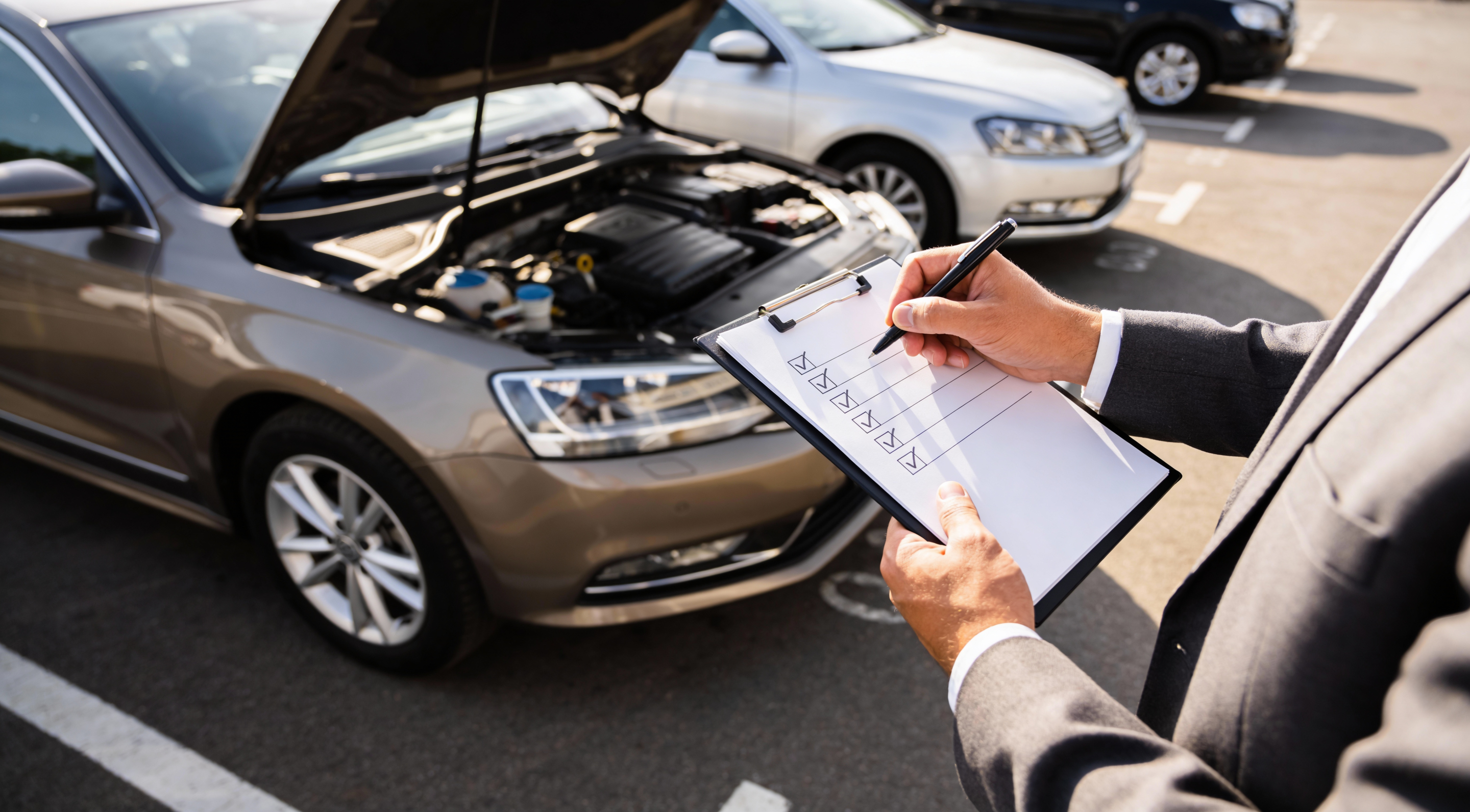
A comprehensive used car buying checklist is your best defense against costly mistakes. According to the Federal Trade Commission, buyers lose thousands of dollars every year because they skipped critical steps, steps that a simple checklist would have caught.
This isn't just another generic list. This used car buying checklist covers 21 essential steps organized by phase: preparation, research, inspection, and closing. Print it, save it, and take it with you when shopping. For detailed explanations of each step, see our comprehensive guide on how to buy a used car.
📋 About This Used Car Buying Checklist
This used car buying checklist includes 21 steps across 4 phases. The most critical item? Running a vehicle history report before you visit. Start with a $4.99 title and stolen check at minimum, or get auction photos for $9.99 to see pre-repair condition and what the dealer paid. Print this checklist and check off each item as you go.
⚡ Minimum Used Car Buying Checklist Before You Visit Any Car
- Run a $4.99 title check. A $4.99 VinPassed quick check confirms the title is clean and the vehicle hasn't been reported stolen across all 50 states. The absolute minimum on any used car buying checklist before handing over money.
- Get the auction photos. A $9.99 auction report shows what the car looked like before the dealer reconditioned it and what they paid for it. Neither Carfax nor AutoCheck includes this.
- Know your state's buyer rights before you sign. Our state-by-state used car buyer protection guide covers cooling-off periods, implied warranty rights, and fraud remedies, scored for all 50 states.
- Get the full report before committing. The complete VinPassed report ($29.99) adds accident history, market values, repair estimates, listing history, AI risk score, and a free permanent garage.
Checklist Overview
21
Total Steps
4
Phases
5
Critical Items
Phase 1: Preparation
Your used car buying checklist starts before you ever look at a vehicle. Proper preparation prevents impulse decisions and gives you negotiating power from the first conversation.
Include purchase price, taxes (5-10%), registration ($100-500), insurance, and immediate maintenance. Use Kelley Blue Book to research fair prices. The 10-15% rule: total monthly car costs shouldn't exceed 10-15% of take-home pay.
Shop rates at your bank, credit union, and online lenders before visiting dealers. Pre-approval lets you negotiate as a cash buyer and prevents the dealer from controlling the financing conversation.
Check Consumer Reports reliability ratings and owner forums for common problems on models you're considering. Know what to watch for before you start shopping.
Insurance rates vary dramatically by vehicle. Get quotes for models you're considering before falling in love with something you can't afford to insure.
Distinguish features you truly need from those you want. This keeps you focused during negotiations and prevents being upsold into a more expensive vehicle than you need.
Phase 2: Research
This phase of your used car buying checklist happens once you've found a specific vehicle. These steps reveal hidden problems before you waste time or money on the wrong car.
The most important item on any used car buying checklist. A comprehensive report reveals accidents, title issues, odometer fraud, and liens invisible during inspection. VinPassed ($29.99) includes auction photos and dealer cost data that Carfax and AutoCheck don't provide. See our best vehicle history report rankings for a full comparison.
Auction photos show what the vehicle looked like before dealer reconditioning, often revealing damage now hidden by paint and detailing. Get auction photos for $9.99 without a full report if needed. If no records are found, your $9.99 applies toward the full report. Learn how to find auction photos by VIN.
Check for salvage, rebuilt, flood, or lemon law brands. A $4.99 VinPassed title check confirms clean title and stolen status across all 50 states in seconds. Title brands are tracked through NMVTIS, the federal database all states are required to report to, your report aggregates from multiple sources capturing this and more, catching title brands even across state lines. Also verify using NICB VINCheck for additional stolen vehicle verification.
Mileage should increase steadily over time. Any decrease or suspicious gap may indicate rollback fraud, report issues to NHTSA. Also verify there are no open safety recalls using NHTSA's free recall lookup. For your state's broader used car legal protections, see our state-by-state buyer protection guide.
The Most Important Step on Your Used Car Buying Checklist
VinPassed Vehicle Intelligence Report, from $4.99
Title check · Auction photos · Dealer cost · Accident history · AI risk score · Free permanent garage
Check Any VIN Now →Phase 3: Inspection
Now you're at the vehicle. This section of your used car buying checklist helps you systematically evaluate condition before committing.
Different shades or textures between panels indicate previous repairs. View from multiple angles in good lighting. Compare against the auction photos from your report.
Gaps between body panels should be even throughout. Uneven gaps suggest collision repair or poor reassembly, often a sign of structural damage not visible on the surface.
Does wear on steering wheel, pedals, and seats match the odometer reading? Excessive wear for claimed low mileage is a potential rollback indicator.
Windows, locks, AC, heat, radio, backup camera, navigation, test everything. Electrical issues are among the most expensive repairs on used vehicles.
Check oil level and color (milky oil means coolant leak), look for leaks on the ground, examine belts and hoses for cracking or wear. Bring a flashlight.
Test acceleration, braking, steering, and handling in varied conditions. Drive at least 15-20 minutes. Don't accept a short lot-only test drive.
Turn off radio and AC. Listen for knocking, grinding, squealing, or any unusual sounds at idle, acceleration, and braking.
Take to an independent mechanic ($100-200). Catches hidden mechanical issues and frame damage that even experienced buyers miss. Non-negotiable on any serious used car buying checklist. See our full 47-point used car inspection checklist for what to ask them to check.
Inspection Tip
If a seller refuses a pre-purchase inspection, walk away immediately. Legitimate sellers welcome inspections because they have nothing to hide. This is a non-negotiable item on any used car buying checklist. See our used car red flags guide for more situations that should stop a deal cold.
Phase 4: Closing
You've found a good car. This final phase of your used car buying checklist ensures you close safely and know your rights before signing anything.

Use CarGurus or Edmunds for comparable pricing. If your VinPassed report shows what the dealer paid at auction, use that as your anchor. See our guide on how to negotiate using auction data.
Lock in the purchase price first. Discussing trade-in or financing at the same time lets dealers obscure costs across multiple numbers. Keep each negotiation completely separate.
Almost every used car buying checklist skips this, and it's one of the most valuable steps. Under the FTC Used Car Rule, dealers must display a Buyers Guide disclosing warranty terms on every vehicle. But your state may give you significantly more: cooling-off periods, no-intent fraud standards, mandatory attorney fees if you're deceived. Our state-by-state used car buyer protection guide scores all 50 states so you know exactly where you stand before signing. If you're buying new and worried about defects, also check our 50-state lemon law guide.
Check for unexpected fees, verify VIN matches across all documents, ensure title is clear of liens, understand warranty terms exactly. Get every verbal promise in writing, they mean nothing otherwise.
Red Flags That Should Stop Any Used Car Buying Checklist Cold
No used car buying checklist is complete without knowing when to walk away: seller won't allow a pre-purchase inspection, pressure to decide immediately, title not in the seller's name, mismatched VINs, vehicle history reveals major undisclosed issues, price seems too good to be true. See our full used car red flags guide.
What to Bring When Shopping
Complete your used car buying checklist preparation by bringing these items to every visit:
- This printed checklist, check off each item as you go
- Pre-approval letter, shows you're a serious buyer with secured financing
- Printed VinPassed report, physical evidence of auction cost and history carries more weight than "I looked it up"
- Smartphone, photos, VIN lookup, price comparisons on the spot
- Flashlight, under-car and engine bay inspection in dim conditions
- Friend or family member, second opinions catch things you miss when excited
- Driver's license and proof of insurance, required for test drives
After Purchase: Your Free Permanent Garage
Your used car buying checklist doesn't end at purchase. Every VinPassed report, including the $4.99 title check, unlocks a free permanent garage that keeps working after you buy.
VinPassed Garage, Free with Every Report
The Post-Purchase Checklist That Runs Itself
More data than fits in any report. Free for life. Add every vehicle you own.
🔧 Maintenance Schedule
Exact service intervals for your specific trim. Completed, overdue, and upcoming. Updates with your mileage.
💰 Repair Cost Lookup
Searchable parts-and-labor estimates before you go to the shop. Know what any repair should cost.
🛡️ Safety Recalls
Live NHTSA recall tracking ongoing. Open recalls flagged as issued, not just at purchase.
📋 Technical Service Bulletins
Known manufacturer-acknowledged problems for your specific model.
🚗 Full Specifications
Complete powertrain, dimensions, fuel economy, every factory option for your exact configuration.
📁 Document Storage
Upload insurance, registration, service receipts, encrypted and private. Tracked service history boosts resale 15-20%.
🔓 Currently free with every report. Premium features coming including an AI concierge that tracks your driving patterns and tells you exactly when service is due. The free tier is permanent.
After Purchase: Follow-Up Steps
Complete these steps within the first week of ownership:
- Register the vehicle within your state's deadline
- Confirm insurance coverage is active
- Change oil and fluids if service history is unknown
- Address any issues flagged during pre-purchase inspection
- Calculate fuel costs using fueleconomy.gov
- Upload purchase documents to your VinPassed garage
- Know your state's return and warranty rights if problems surface, see our used car buyer protection guide
Even with a thorough used car buying checklist, mechanical problems can develop over time. VIP Warranty provides coverage for vehicles up to 250,000 miles with no mileage cap once enrolled, protection that picks up where your checklist ends.
Complete Your Used Car Buying Checklist
Start With a VinPassed Report, from $4.99
Title check · Auction photos · Dealer cost · Full history · Free permanent garage
Check Any VIN Now →Used Car Buying Checklist: Frequently Asked Questions
40 questions across 7 categories. Click any category to expand.
Running a vehicle intelligence report before you visit is the most critical item on any used car buying checklist. It reveals accidents, title issues, odometer fraud, and other problems completely invisible during a test drive. Start with a $4.99 title and stolen check at minimum, then get auction photos for $9.99 to see pre-repair condition, or the full $29.99 VinPassed report for everything including dealer cost and AI risk analysis.
Yes. Click the "Print This Checklist" button above. The print stylesheet hides CTAs and the FAQ so you get a clean, checklist-only printout. Having a physical copy ensures you don't skip critical steps when excited about a vehicle.
The complete used car buying checklist typically takes 1-2 weeks from research through purchase. Don't rush it. The research phase alone, running the report, reviewing auction photos, comparing listings, can take a few days and saves more money than any amount of in-person negotiation.
Bring your printed used car buying checklist, pre-approval letter, a printed VinPassed report showing auction cost and history, smartphone, flashlight, a friend or family member for a second opinion, driver's license, and proof of insurance. The physical report carries more weight in a negotiation than referencing something on your phone.
Excitement and sales pressure cause buyers to skip critical steps. A dealership environment is designed to move you toward a decision quickly. A systematic used car buying checklist keeps you organized, slows the process down enough to think clearly, and ensures you don't miss anything that could cost you thousands later. The FTC recommends always checking vehicle history and getting an independent inspection, both are on this checklist for exactly that reason.
Yes, and the research phase becomes even more critical when buying online since you can't do a physical inspection before committing. Running the full VinPassed report, reviewing all auction photos carefully, and understanding your state's buyer protection rights are non-negotiable steps when you can't see the vehicle in person. For platforms like Carvana, see our Carvana VIN check guide for what their reports include and miss.
The $4.99 VinPassed Title and Stolen Check is the lowest-cost meaningful first step. It confirms clean title and stolen vehicle flag across all 50 states in seconds, and applies toward the full report if you upgrade. For auction photos and dealer cost, the $9.99 Auction Report is the next rung. The complete $29.99 report covers everything this checklist calls for in a single run.
No. Carfax covers accident history, title records, service records, and theft flags, all useful. But it does not include auction photos showing pre-repair condition, dealer acquisition cost, repair estimates, or listing history. Those are checklist items that only VinPassed covers. If a dealer provides free Carfax, take it as supplementary data, but don't treat it as a complete research phase on its own. See our best vehicle history report comparison.
NMVTIS is the National Motor Vehicle Title Information System, a federal database maintained by the Department of Justice that all states are required to report title brands to, salvage, flood, rebuilt, junk. It's the primary defense against title washing, where vehicles move across state lines to hide a branded title. A comprehensive vehicle history report aggregates from multiple sources that capture NMVTIS data and more, catching cross-state title issues that a single-state DMV check would miss.
Auction photos are the most powerful item in the research phase of any used car buying checklist. When a vehicle sells at Manheim, Copart, IAAI, or ADESA, it's photographed extensively, showing damage, condition, and wear before any reconditioning. A car that now looks showroom-fresh may have had significant documented damage six months ago. Carfax and AutoCheck don't include these photos. VinPassed's $9.99 Auction Report gives you the photos plus what the dealer paid, the two pieces of information dealers least want buyers to have. Learn more about finding auction photos by VIN.
Use NHTSA's free recall lookup, enter the VIN and it shows all open safety recalls issued by the manufacturer. Open recalls mean the manufacturer has acknowledged a safety defect and is obligated to repair it at no charge. VinPassed also includes recall information in every report with ongoing tracking in the free garage after purchase. For your broader legal protections if something goes wrong, see our state-by-state buyer protection guide.
Run a $4.99 VinPassed title check to confirm clean title status across all 50 states. Also run a free NICB VINCheck for additional stolen vehicle and total loss verification. When you're at the dealership, verify that the name on the title matches the seller, the VIN on the title matches the VIN on the dashboard and door jamb, and there are no lien holder names on the title that haven't been released.
Odometer fraud is the illegal practice of rolling back a vehicle's mileage to make it appear lower than actual. NHTSA estimates odometer fraud costs buyers over $1 billion annually. Your checklist catches it two ways: the vehicle history report cross-references odometer readings from DMV records, insurance submissions, auction records, and service history to flag inconsistencies; and comparing interior wear to claimed mileage during your physical inspection provides a secondary check. Any suspicious gap or decrease in reported mileage should be treated as a serious red flag.
A pre-purchase inspection at an independent mechanic typically costs $100-200. This is one of the highest-ROI items on your used car buying checklist, a $150 inspection on a $25,000 purchase is 0.6% of the transaction cost. A single missed issue, a failing transmission, cracked engine block, or frame damage, can cost $3,000-15,000. Always use an independent mechanic, not one recommended by the dealer.
The full 47-point physical inspection is covered in our separate used car inspection checklist. Key areas on this checklist's steps 10-16: paint mismatches indicating prior repair, uneven panel gaps suggesting collision or poor reassembly, interior wear inconsistent with mileage, all electronics, under-hood oil color and leak signs, and test drive behavior at varied speeds. The auction photos from your VinPassed report give you a before-reconditioning baseline to compare against what you see now.
Walk away. There is no legitimate reason for a seller to refuse an independent inspection unless they know the vehicle has problems they don't want discovered. This is a non-negotiable item on any serious used car buying checklist. Dealers who refuse inspections on "as-is" sales are often the ones most likely to have undisclosed issues. See our used car red flags guide for other situations where walking away is the right call.
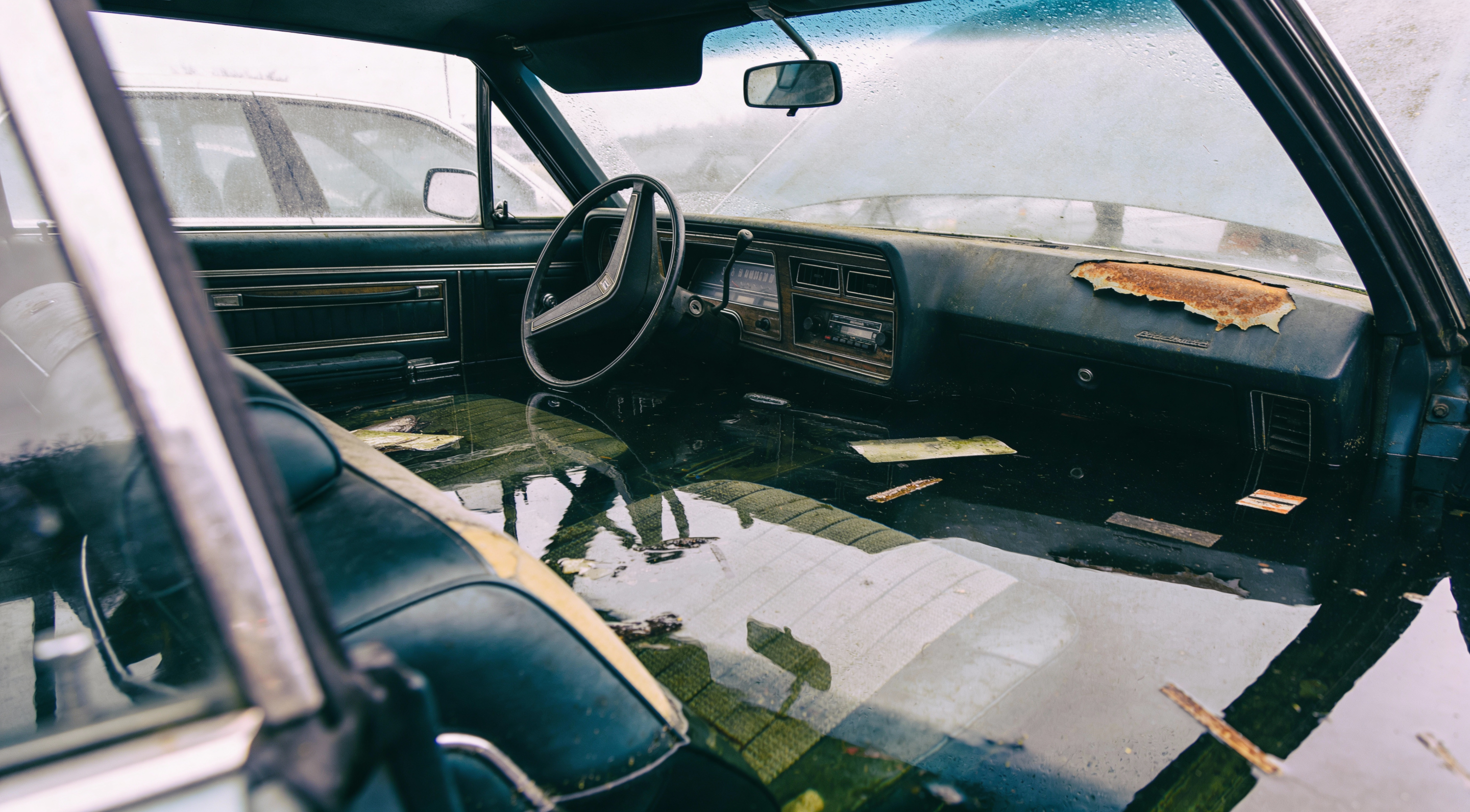
Flood damage is one of the most dangerous things to miss on a used car buying checklist because it causes progressive electrical failure that can be invisible for months. Physical signs: musty smell, water stains in carpet or trunk, rust or corrosion on seat rail bolts, mud residue in crevices under the dash or in the engine bay. Your vehicle history report catches flood title brands when they've been issued, but the best evidence is auction photos, waterlines and corrosion are visible in pre-reconditioning photos even when the finished car shows none of it.
Structural damage means the vehicle's frame or unibody was bent or compromised in a collision. It's the most serious type of damage because it affects safety in future crashes and causes ongoing alignment and handling issues. On your checklist: uneven panel gaps are the primary visual indicator. The pre-purchase inspection should include frame measurement. Auction condition grades and damage codes in your VinPassed report flag structural damage directly. See our full guide on what structural damage means before buying any vehicle with a collision history.
When price, trade-in, and financing are negotiated simultaneously, dealers can move numbers between the three to make the deal appear better than it is. They might raise the trade-in value while padding the purchase price, or lower the monthly payment by extending the loan term. Locking in the purchase price first removes one variable from the equation. Then negotiate the trade-in separately as its own transaction. Then evaluate financing as a separate decision.
When you know what the dealer paid at auction, you have a documented anchor for negotiation rather than a guess. If they paid $14,000 and are asking $22,000, you know the range. A counter of $17,000-18,000 gives them a fair margin while saving you $4,000-5,000. The VinPassed report's dealer acquisition cost data is the single most powerful negotiating tool on this checklist. See our full guide on how to find what the dealer paid.
15-25% over wholesale cost is standard for a clean dealer acquisition. This covers reconditioning, floor plan financing, overhead, and profit. Markups over 40%, especially on vehicles with any auction damage history, are worth pushing back on hard. A vehicle that sat on the lot for 60+ days with two price drops is a motivated seller. Your VinPassed listing history shows exactly how long they've been trying to move it.
Yes, this is one of the highest-value items on the closing phase of your used car buying checklist. If your mechanic finds $800 in deferred maintenance or $1,200 in brake work, that's a documented number to negotiate against. Request a written report from the mechanic. Present it to the dealer and ask them to either repair the items before purchase or reduce the price accordingly. Most dealers will negotiate on documented repair needs from an independent inspection.
Walk away when: the seller refuses a pre-purchase inspection, the vehicle history reveals major undisclosed damage, the VIN on the title doesn't match the car, the dealer won't negotiate at all despite documented auction cost, the title isn't in the seller's name, or any pressure tactic makes you feel rushed. Your used car buying checklist exists precisely to prevent emotional decisions. There are always other cars. See our full used car red flags guide for the complete list.
Under the FTC Used Car Rule, dealers are required to display a Buyers Guide on every used vehicle disclosing: whether the car comes with a warranty or is sold as-is, what systems are covered if there's a warranty, the dealer's name and contact information, and a recommendation to get promises in writing. Always ask for and read the Buyers Guide before signing. If the dealer claims the car has a warranty but the Buyers Guide says "as-is," the written document controls.
Yes, and most checklists don't include it. Your state's used car buyer protection laws determine what legal recourse you have if something goes wrong. Some states have mandatory cooling-off periods, no-intent fraud standards (meaning you don't have to prove the dealer knew about a problem, the misrepresentation itself creates liability), and mandatory attorney fees if you win a claim. Others allow nearly all as-is sales with minimal recourse. Our state-by-state used car buyer protection guide covers all 50 states so you know exactly where you stand before signing.
An implied warranty of merchantability means the vehicle should be reasonably fit for its ordinary purpose, driving. In many states, dealers cannot fully eliminate this warranty even with an as-is sale. California is the strongest example: dealers cannot disclaim the implied warranty of merchantability at all under Civil Code §1792. Other states allow as-is sales to effectively eliminate it. Our state-by-state guide shows which states have implied warranty protections that survive as-is language and which don't.
Your options depend on your state. Most states have UDAP (Unfair and Deceptive Acts and Practices) statutes that provide real remedies if a dealer knowingly misrepresented the vehicle, including mandatory attorney fees and punitive damages in some states. Document everything: save all communications with the dealer, your VinPassed report, the pre-purchase inspection report, and any photos you took. Our state-by-state used car buyer protection guide covers what's available where you live. If you purchased a new vehicle with warranty defects, our lemon law calculator can help assess your situation.
In most states, yes. Dealers are not required to disclose accidents that don't appear in a vehicle history report, and have no obligation to volunteer information about damage repaired before they acquired the vehicle. This is exactly why auction photos are on this checklist, physical evidence of pre-repair condition exists independently of what any dealer chooses to disclose. See our full breakdown on how dealers hide accident history and what states require them to disclose.
Most states do not have a mandatory cooling-off period for used car dealer purchases, contrary to popular belief, there is no federal right to cancel a car purchase within 3 days. California is the notable exception: starting October 1, 2026, California dealers must offer a mandatory 3-day return right on vehicles priced at $50,000 or under under the CARS Act (SB 766). Some states allow dealers to offer an optional cancellation policy at their discretion. Our state-by-state guide covers which states have cooling-off rights and under what conditions they apply.
Yes, and private party sales require extra vigilance on every item. Private sellers have fewer legal disclosure obligations than dealers in most states, no FTC Buyers Guide requirement, often no implied warranty. A $4.99 title and stolen check is the absolute minimum before handing any private seller money. Confirm the title is in their name, the VIN matches, and there are no liens. Run the full report. Get the pre-purchase inspection. The entire used car buying checklist applies with less legal backstop if something goes wrong.
The same checklist applies, but some items carry different weight. CPO vehicles come with a manufacturer-backed inspection and extended warranty, which reduces but doesn't eliminate the need for an independent inspection. CPO status does not mean the vehicle has no auction history, no prior undisclosed damage, or that the dealer paid a fair price. Run the VinPassed report on any CPO vehicle. The auction photos and dealer cost data remain valuable regardless of certification status.
The same checklist applies but certain items deserve extra attention. Pre-purchase inspection becomes even more critical, ask specifically about transmission condition, timing belt or chain status, cooling system health, and suspension wear. Maintenance history review is essential, deferred service on a high-mileage car compounds quickly. Your VinPassed repair cost estimates help you budget for what's likely coming. The VinPassed garage maintenance schedule shows exactly what service intervals are due for your specific trim at current mileage.
Yes, and the research phase becomes even more critical when you can't do a physical inspection before committing. Run the full VinPassed report and review all auction photos before placing a deposit. Understand the return policy exactly, what condition is required, who pays return shipping, what fees apply. For Carvana specifically, see our Carvana VIN check guide for what their 150-point inspection covers and what it misses.
Buying a salvage or rebuilt title vehicle requires additional checklist steps: verify the salvage title was properly converted to a rebuilt title after passing your state's inspection, confirm the vehicle is insurable (many insurers won't cover salvage titles or charge significant premiums), ask specifically about what damage triggered the salvage designation and get repair documentation, and have your pre-purchase mechanic specifically inspect the repair quality. The VinPassed auction photos show the original damage. See our full salvage title guide before buying any salvage or rebuilt title vehicle.
All standard checklist steps apply plus EV-specific additions: check the battery state of health using an OBD-II diagnostic tool or manufacturer app, battery degradation is the primary depreciation driver on EVs. Verify whether the vehicle qualifies for the federal Used EV Tax Credit (up to $4,000, requires dealer purchase, vehicle under $25,000, income limits apply). Check charging port condition and whether the charging cable is included. Review whether any battery warranty remains and what it covers. For used EVs specifically, the pre-purchase inspection should include a battery health assessment.
Yes, every VinPassed report unlocks a free permanent garage for that vehicle: exact maintenance scheduling for your specific trim, searchable repair cost estimates, live NHTSA recall tracking, Technical Service Bulletins for known model problems, full factory specifications, and document storage. Premium features including an AI maintenance concierge are coming, with the free tier permanent. No other vehicle history service offers anything equivalent after purchase.
Register the vehicle within your state's deadline, confirm insurance is active, change oil and fluids if service history is incomplete, address any issues from the pre-purchase inspection, upload purchase documents to your VinPassed garage, and calculate fuel costs using fueleconomy.gov. Also review your state's return and warranty rights in case early problems surface, knowing what protection you have before you need it is much better than researching it in a crisis.
Documented service history is one of the strongest signals a used car buyer looks for. A vehicle with receipts for every oil change, tire rotation, and scheduled service commands a meaningful premium over an identical vehicle with no records. The VinPassed garage document storage lets you upload every receipt and service record, encrypted and private, so when you sell, you have a complete ownership history to show buyers. Industry estimates put the resale premium at 15-20% for vehicles with comprehensive documented service history.
Even a thorough used car buying checklist can't predict future mechanical problems. For used vehicles, particularly higher-mileage purchases, extended mechanical protection is worth considering. VIP Warranty provides exclusionary coverage for vehicles up to 250,000 miles with no mileage cap once enrolled, covering virtually all mechanical components. A vehicle history report and mechanical warranty together provide the most complete protection from purchase through ownership.
Lemon laws primarily protect buyers of new vehicles with serious defects that manufacturers can't fix within a reasonable number of attempts. Most states' lemon laws do not cover used vehicles, though some states have limited used car lemon law protections. For used car issues, UDAP statutes are typically the more relevant legal pathway. If you purchased a new vehicle with recurring warranty defects, our 50-state lemon law guide covers your state's specific remedies and our lemon law calculator can help you assess whether your situation qualifies.